Asian Hornet Detectionprobably Vespa velutina · 85 %
Pilot phase 2026 · App + bait station + platform
From the first photo to a nest that gets found.
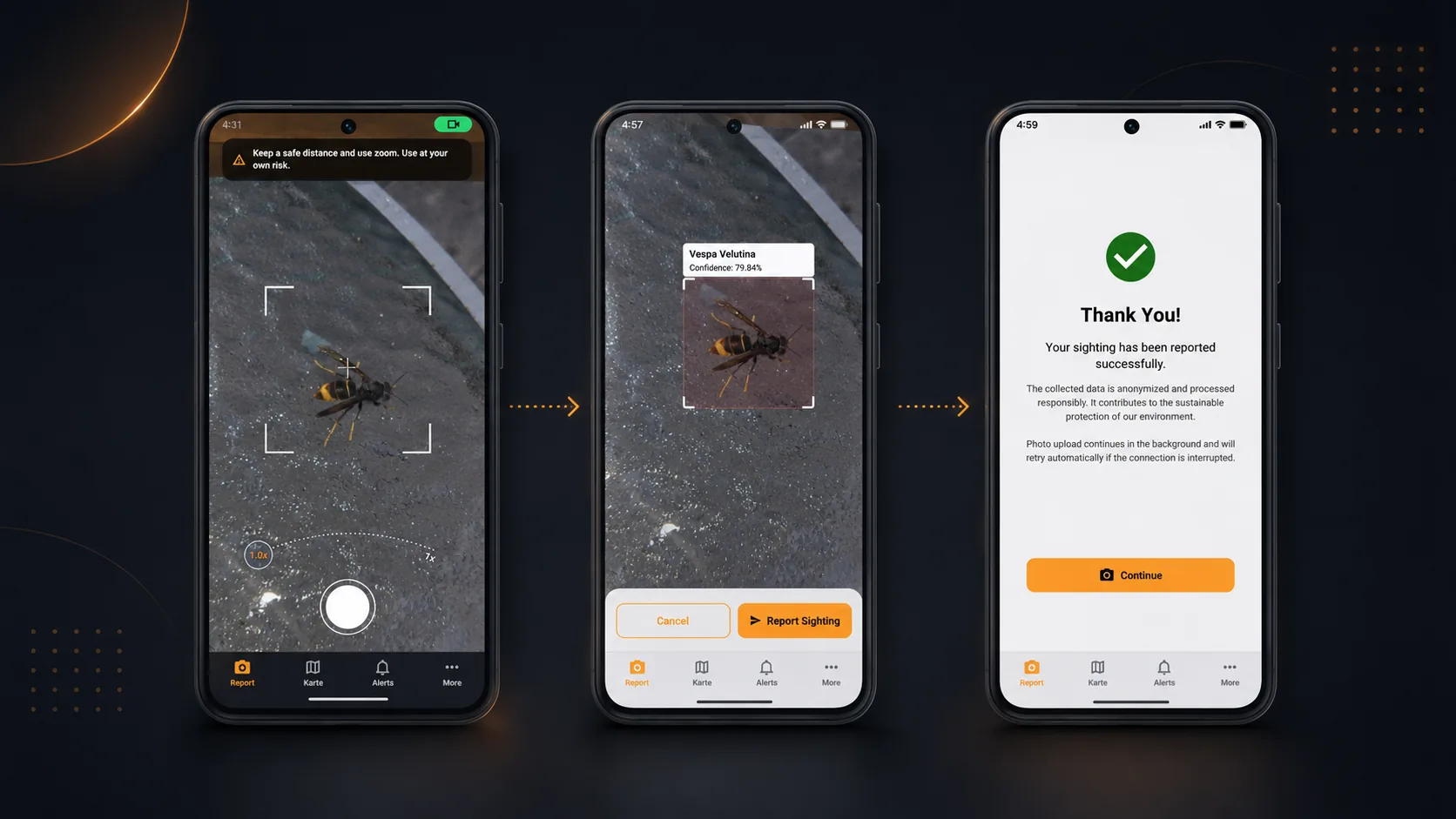
Anyone who spots an Asian hornet or a nest reports the find from their phone — in under a minute, no account needed. Bait stations nearby show where the hornets fly back to. The local beekeeping association sees both in one place and organises the control work together — and by the end of the season has it on record how things stood across the region and what the association got done.
Asian Hornet Detectionprobably Vespa velutina · 85 %
WHAT IS AT STAKE
One nest eats its way through a whole season.
An average Asian hornet nest consumes around 11 kg of insects and spiders per season — on the order of more than 90,000 bee-sized prey animals. Large nests reach roughly twice that.
It does not only hit honey bees. A DNA analysis of more than 1,500 hornets found traces of 1,449 species; of the 50 most frequent ones, 43 were flower visitors and pollinators — wild bees, bumblebees, hoverflies.
That is why how quickly a nest is found matters. Not whether.
Sources: Rome et al. 2021 (16 nests over three years) · Pedersen et al. 2025
THE PATHS
Three paths that lead to a nest
Sometimes the nest hangs in plain sight. More often, many single sightings or a bait station put you on the trail. All three paths feed into the same shared process.
Many single sightings
Someone spots a hornet.
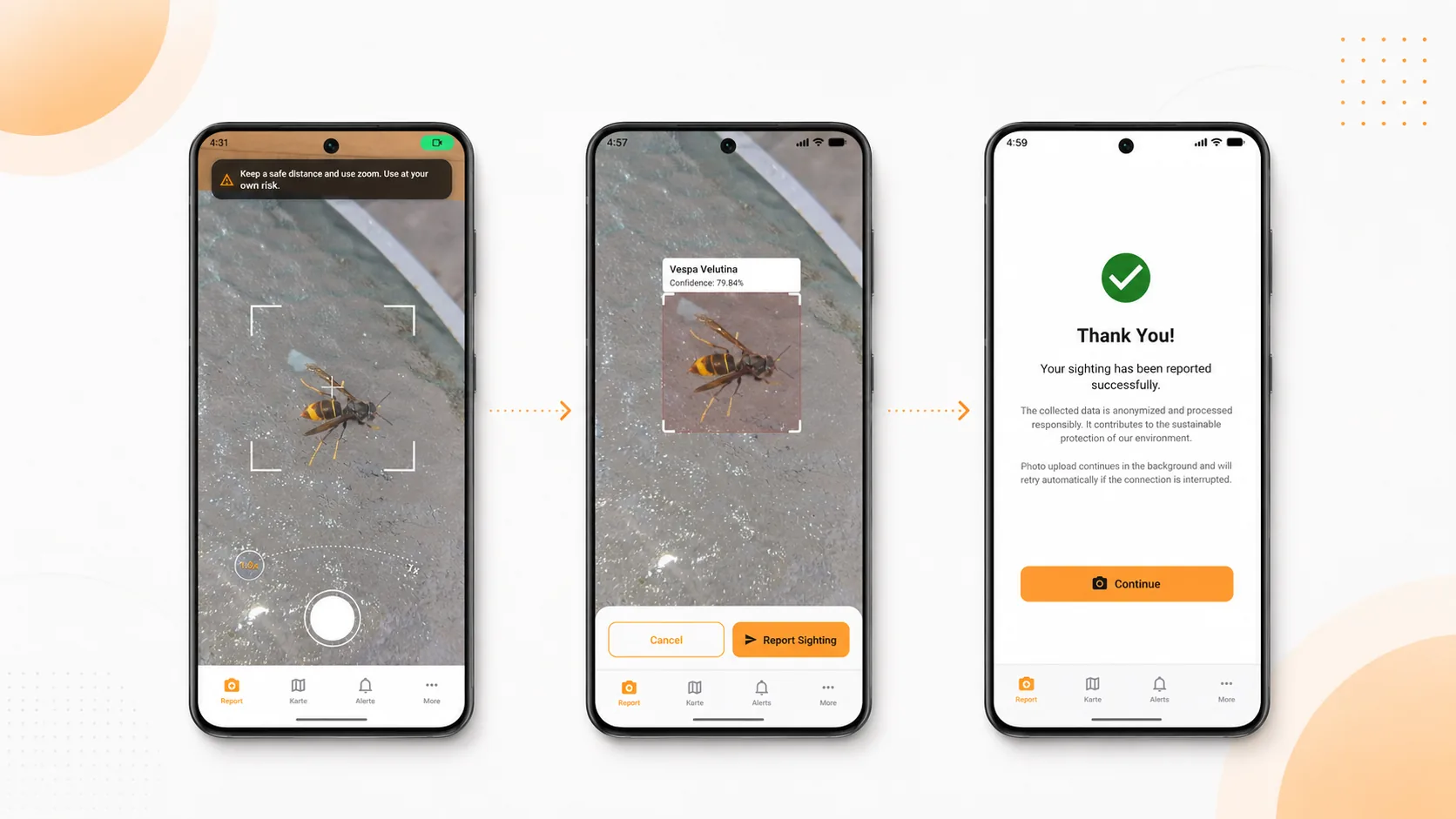
Take a photo, confirm the location, send — with HornetLog in under a minute, no account needed.
Many reports add up to a picture.
Hivora collects the region's sightings on a map, condenses them into a heatmap and uses AI to work out the areas worth searching.
Bait stations & triangulation
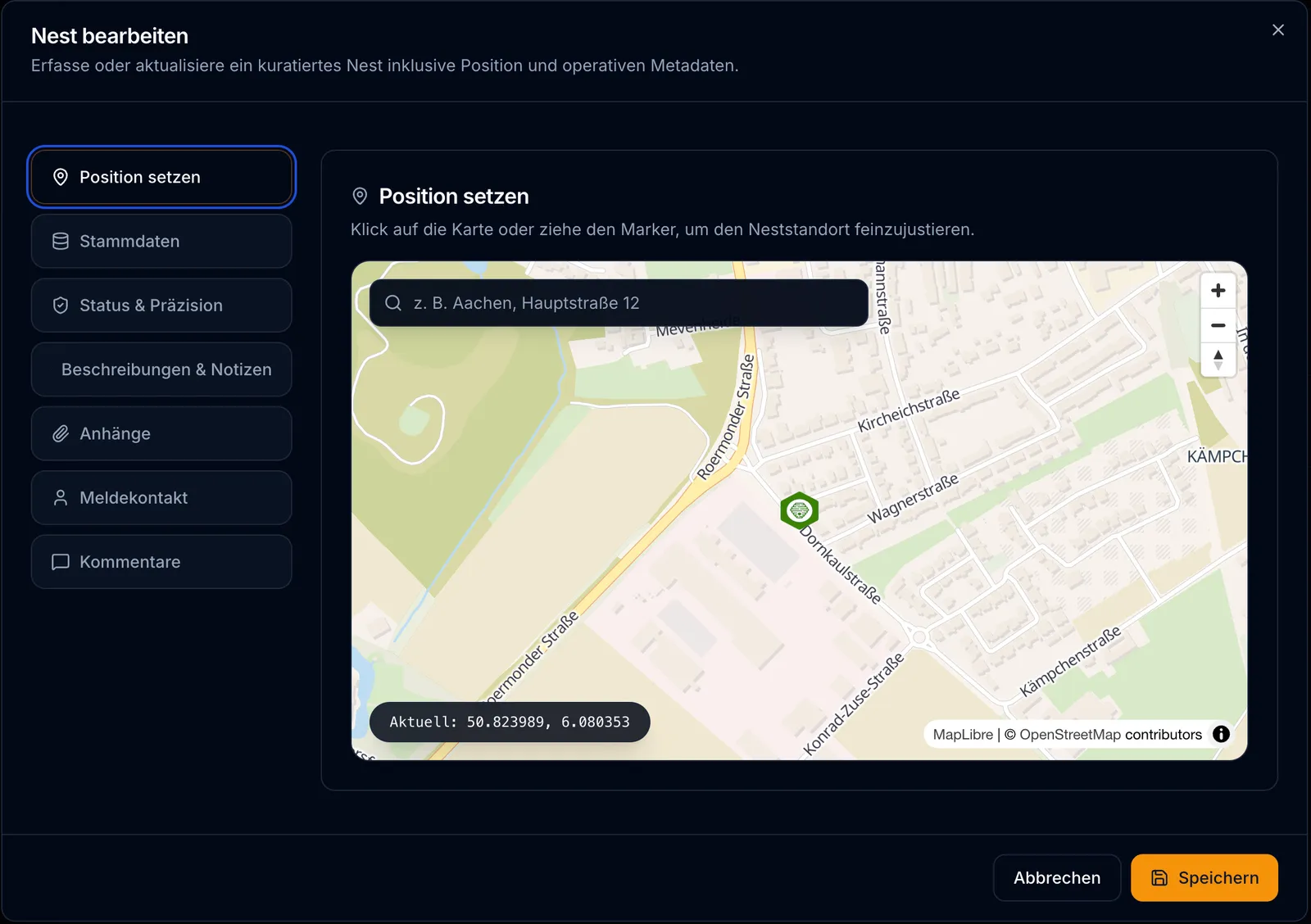
Bait stations go up around the area as observation points.
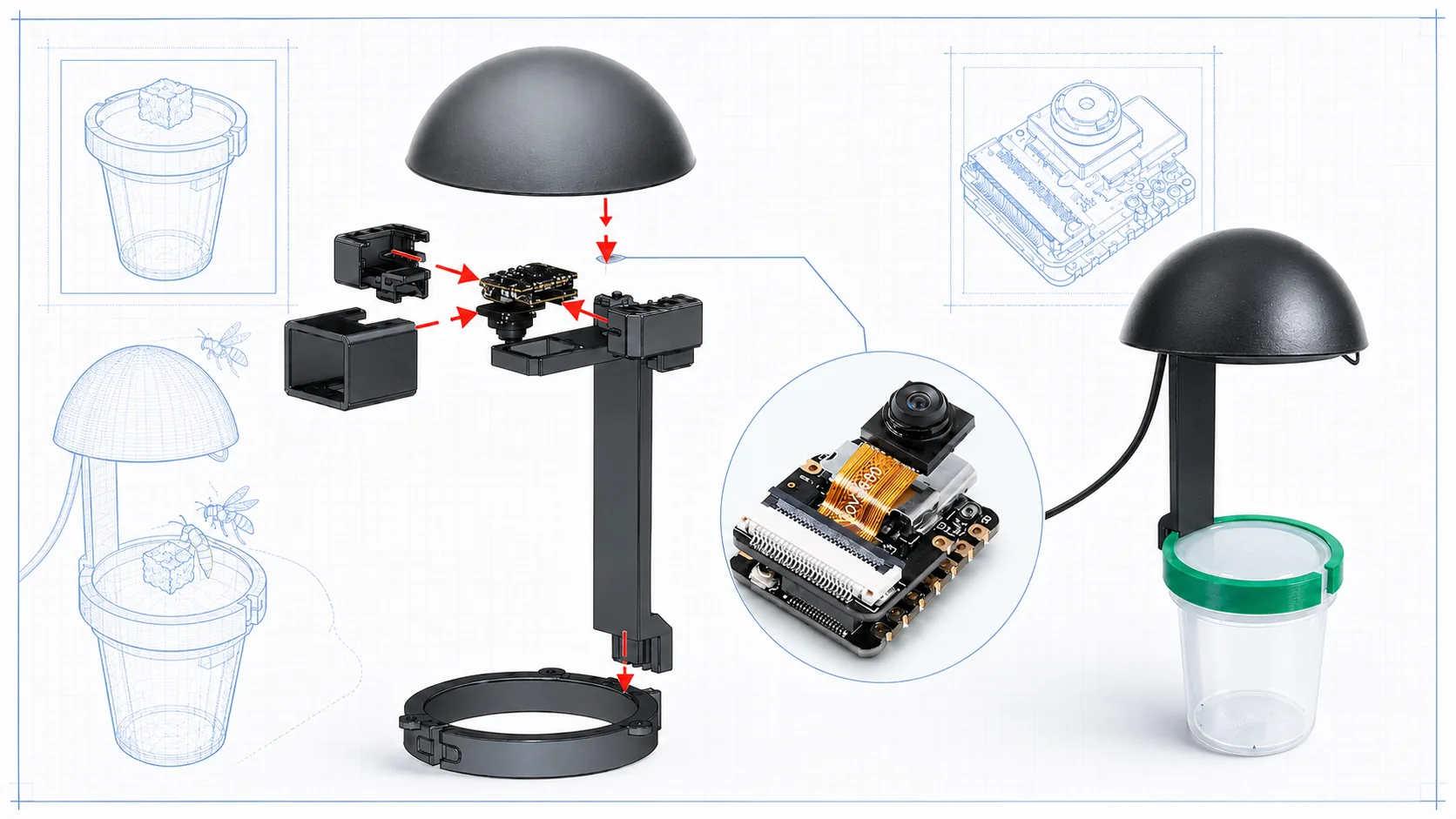
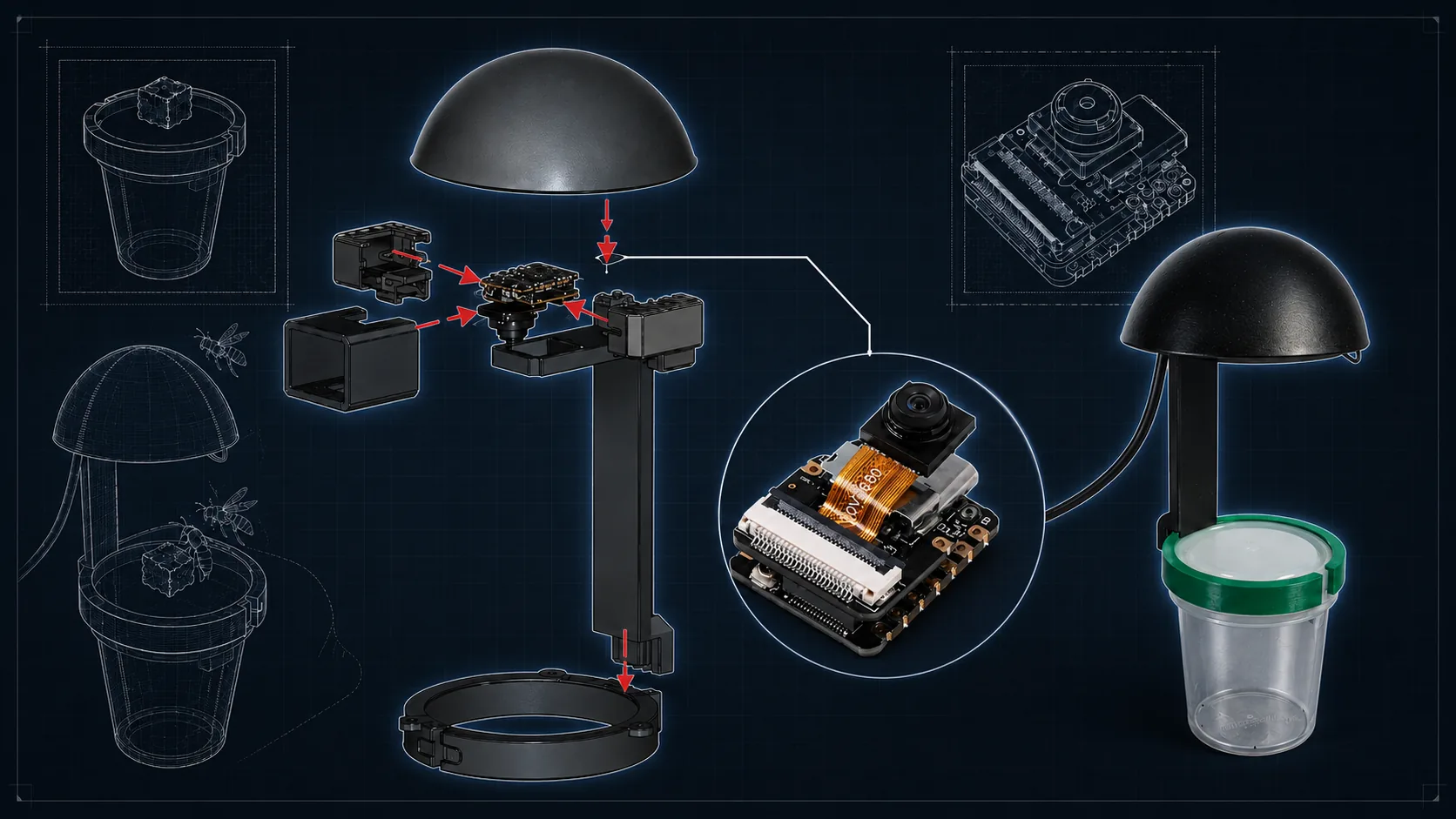
A camera module retrofits the classic wick bait pot: Hivora Sense recognises right at the pot what flies in.
The return flight reveals where the nest is.
A marked hornet flies to the nest and comes back. Departure bearing and return time narrow down where it stands — the well-known triangulation method. Hivora Sense records both, so nobody has to wait it out at the pot for hours.
The nest found directly
Someone finds the nest.
In a tree, under the eaves, in a hedge. No bait stations needed — the nest can be reported right away.
From here on, all threads come together
1
The nest gets reported.
However it was found: the report goes through the app or the form on the association's website. It lands in the region's shared pool.
2
Someone takes the report on.
A beekeeper from the region accepts it — visible to everyone else, so two people don't drive to the same address.
3
The nest removal is documented.
When, by whom, with what outcome. Still traceable a year later.
FOR ASSOCIATIONS, LOCAL GROUPS AND REGIONAL FEDERATIONS
The reports arrive with you.
Someone with a nest in their garden is not looking for Hivora. They are looking for someone who helps. Through HornetLog they find you.
You build your own reporting form and embed it on your association's website. What comes in through it does not sit in a private inbox — it sits in the region's shared pool, visible to everyone.
What that changes
The work no longer hangs on the two people who always do everything. Whoever takes a report on is visible to the others. And when somebody asks in winter what happened last season, it is written down.
FOR BAIT STATION OPERATORS
The pot tells you where to look.
A Hivora Sense is a camera module for the classic wick bait pot. It recognises directly on the device what arrives, and keeps a record — even without internet.
For you that means: no more driving out to twelve pots every day just to see whether anything happened.
What you need
A board for around €12–25, a USB-C cable, a microSD card and a specimen cup from the pharmacy. €30–40 all together. No soldering. Power comes from a power bank or a socket at the apiary. The housing comes off a 3D printer — the files are free, and without a printer of your own a makerspace or your association will have one. You flash the software straight from the browser, no programming needed.
The honest part
Right now you assemble the station yourself — there is no finished device to buy yet. And the detection keeps getting better: it gives you a pointer, not a determination.
"Hivora Sense saves us a lot of legwork..."
FOR ANYONE WHO HAS SEEN ONE
Seen a hornet?
Take a photo, confirm the location, send. No account, in under a minute. Every observation helps build a clearer picture of the situation. If an association takes part in your district, your observation goes straight to them.
THREE BUILDING BLOCKS
One app. One bait station. One platform.
Hivora consists of three building blocks that interlock — each also works on its own.
One decision, a whole region — the member associations come along. Tell us how many associations belong to you and we will set it up together.
What we are working on
Hivora Sense observes. It catches nothing and kills nothing.
The supporter contribution funds the further development of the detection models. The goal behind it: to tell the Asian hornet and native species apart reliably enough that bycatch becomes avoidable. That is exactly the main criticism of today's traps — and the precondition for being able to build a selective one at all.
Today we are collecting the data for that. Nothing more. There is no date, no pre-order and no promised hardware. A subscription is support, not a stake.
Frequently asked questions
Questions about Hivora
What is Hivora?
Hivora is a system of tools for coordinating, documenting and removing nests of the Asian hornet (Vespa velutina). It consists of the HornetLog app for bait stations and observations, the Hivora Sense digital monitoring bait stations and a platform on which associations, federations and organisations organise the region's shared pool.
What is HornetLog?
HornetLog is the free app in the Hivora system. Use it to pair the Hivora Sense bait stations and sync their recordings. You can also submit Asian hornet (Vespa velutina) observations in seconds with a photo and location – the first one without any account. Every observation helps build a clearer picture of the situation and improve the system.
What is Hivora Sense?
Hivora Sense is a digital monitoring bait station: a camera module with on-device AI that extends the classic wick-based bait pot and autonomously detects and documents Asian hornet activity at the pot. Analysis runs directly on the device, and recordings are synced via the HornetLog app.
What is the difference between Hivora, HornetLog and Hivora Sense?
Hivora is the overall system and the platform for the region's shared pool. HornetLog is the app for syncing the bait stations and submitting observations. Hivora Sense is the digital monitoring bait station for continuous observation. App, bait station and platform work together, but can also be used on their own.
Can nests be reported through Hivora?
Yes. Besides sightings, nests can also be reported – via the HornetLog app or through reporting forms that associations and federations embed on their own website. Nest reports come together in a structured way on the platform, where participating associations can take them on and coordinate further steps.
Can associations embed their own reporting forms?
Yes. Associations and organizations can embed Hivora reporting forms as a web component via JavaScript on their own website. Sightings and nest reports flow straight into the platform as tickets – alongside app reports and bait-station detections.
Can reports be exported?
Yes. Sightings and nest reports can be exported – for documentation, analysis and sharing, for example as a basis for official reporting channels. This keeps the collected data usable instead of scattered across individual inboxes.
Does Hivora show participating organizations?
Yes. Participating associations and organizations can be made visible by region, so it becomes clear where activity is already underway. Taking part does not automatically imply official responsibility – it makes engagement visible and supports coordination.
Does Hivora Sense work without the internet?
Yes. The AI analysis runs directly on the device, so Hivora Sense works completely offline. Recordings are synced later via the HornetLog app – either over Wi-Fi or offline via SD card.
Is Hivora Sense a trap?
No. Hivora Sense is a monitoring bait station: a camera module that documents what arrives at the pot. It catches and kills no animals. What we are working on is something else — a separate, future device that could trigger selectively based on the detection, in order to avoid bycatch. Today we are only collecting the data for that. Hivora Sense remains an observation device.
Can Hivora Sense observe marked hornets?
Hivora Sense documents activity at the bait station and can help observe recurring animals – for example marked hornets and their return to the pot. This provides clues for further observation, but does not replace expert assessment.
Is Hivora an official reporting system?
Hivora is an independent platform that supports structured recording, coordination and analysis. It is not an official reporting system everywhere. However, recorded sightings and nest reports can be exported and prepared for official reporting channels.
CONTACT
Association, federation or organisation? Let’s talk.
We’ll show you in a short demo how Hivora fits your workflows.
Newsletter
Stay in the loop
Updates on the HornetLog app, Hivora Sense and the Hivora platform — straight to your inbox.
Cookies & analytics
We use cookies and a self-hosted analytics tool to analyse the use of this site anonymously and improve our service. No data is shared with third parties. You can decline the processing or revoke your decision at any time. Details are in our privacy policy. Privacy policy